
Back to Patient Education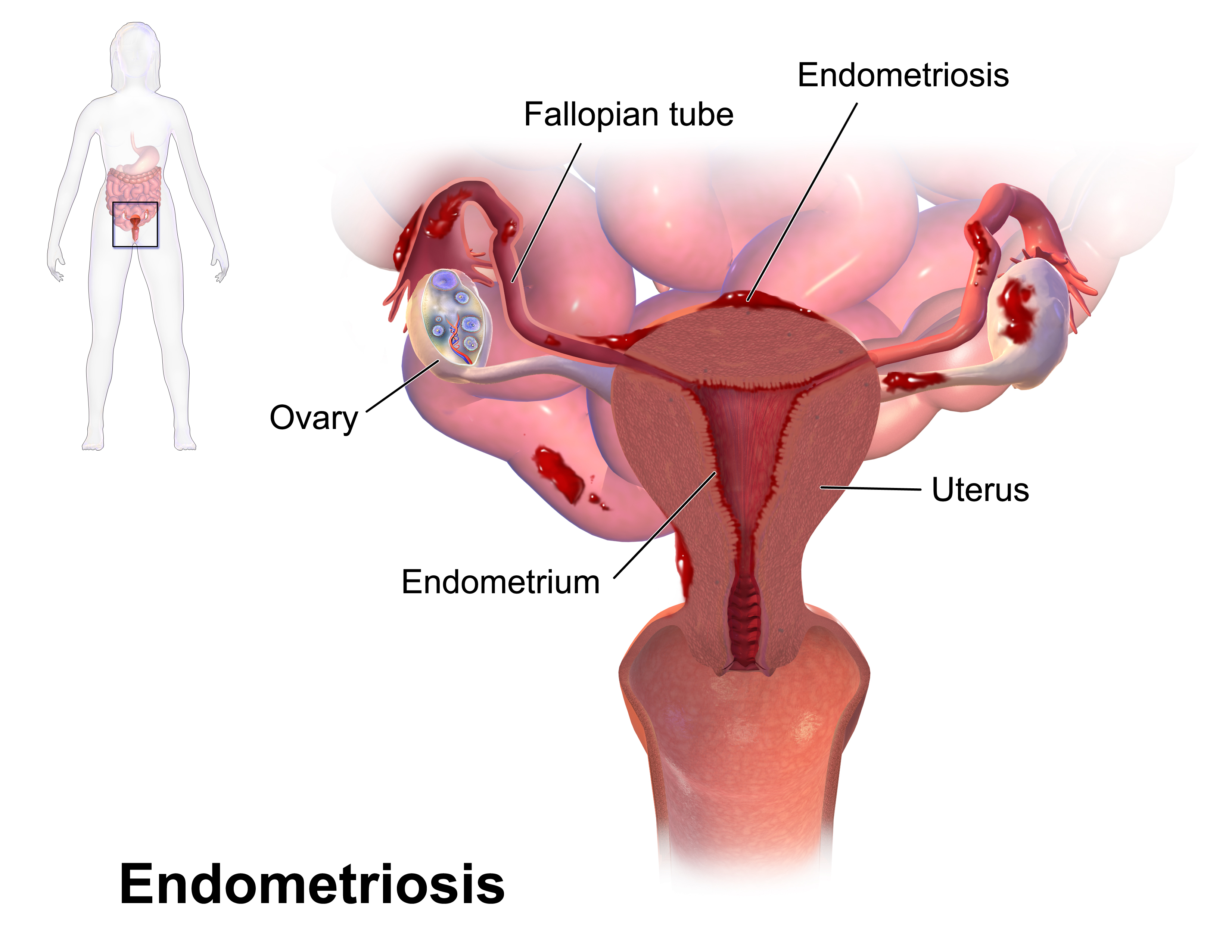
Endometriosis is a condition where tissue similar to the lining of the uterus (endometrium) grows *outside* the uterus — on the ovaries, fallopian tubes, bowel, bladder or pelvic wall. Every month this tissue bleeds along with the period, but the blood has nowhere to go. The result: inflammation, scarring, cysts (called endometriomas or "chocolate cysts") and adhesions.
The symptoms range from "no problem at all" to severe pain and infertility. That is why treatment is *individualised* — never a one-size-fits-all.
Endometriosis is graded I to IV on what's seen during surgery. But — and this is important — stage does not always match symptoms. A woman with stage I disease can have crippling pain. A woman with stage IV can be relatively comfortable.
Stage What it looks like
------
I (Minimal) Small surface implants
II (Mild) More implants, deeper, small adhesions
III (Moderate) Endometrioma, multiple adhesions
IV (Severe) Large endometriomas, dense adhesions, often involving bowel/bladder
Most women begin with medical management:
Painkillers (NSAIDs) for cramps.
Hormonal therapy: combined OC pills, progestin-only pills, or the Mirena IUS — taken continuously to suppress periods.
GnRH analogues or newer agents (dienogest) in tougher cases.
Lifestyle: regular exercise, anti-inflammatory diet, pelvic floor physiotherapy.
If pain is controlled and pregnancy isn't being attempted right now, medical management is often enough — sometimes for years.
Laparoscopic surgery is considered when:
1. Pain doesn't respond to 3–6 months of optimised medical therapy.
2. An endometrioma is large (typically > 4 cm) or growing.
3. Fertility is the goal and disease is moderate-to-severe — surgery can improve pregnancy chances.
4. The diagnosis is uncertain and only surgery can confirm it.
5. Deep infiltrating endometriosis involves bowel, bladder or ureters with bothersome symptoms.
6. Suspected malignancy in any cyst.
Surgery is almost always *laparoscopic* (key-hole) in expert hands — open surgery is rare today.
It can:
Remove visible disease and restore anatomy.
Significantly reduce pain in most women (60–80%).
Improve natural fertility, especially in moderate disease.
It cannot:
"Cure" endometriosis permanently — recurrence in 5 years is 20–50% if no medical suppression follows.
Replace a fertility evaluation if pregnancy isn't happening for other reasons (sperm count, tubal factor, age).
Continue hormonal suppression unless pregnancy is being attempted — this is the single biggest factor that prevents recurrence.
Re-evaluate every 6–12 months for symptoms and ultrasound.
For women trying to conceive: start trying soon after recovery — fertility is best in the first 12 months post-surgery.
Mild symptoms + no pregnancy plan: medical management.
Bad pain not responding to 3–6 months of hormonal therapy: consider surgery.
Trying to conceive + moderate–severe disease: surgery often helps.
Large endometrioma or deep disease: surgical consultation needed.
The right answer is rarely "always operate" or "never operate" — it depends on you.
Women's Health 10 min read
When Does Endometriosis Need Surgery? A Stage-By-Stage Guide
By Dr. Neha Singhania • 2026-02-26
What endometriosis actually is
Endometriosis is a condition where tissue similar to the lining of the uterus (endometrium) grows *outside* the uterus — on the ovaries, fallopian tubes, bowel, bladder or pelvic wall. Every month this tissue bleeds along with the period, but the blood has nowhere to go. The result: inflammation, scarring, cysts (called endometriomas or "chocolate cysts") and adhesions.
The symptoms range from "no problem at all" to severe pain and infertility. That is why treatment is *individualised* — never a one-size-fits-all.
Stages, briefly
Endometriosis is graded I to IV on what's seen during surgery. But — and this is important — stage does not always match symptoms. A woman with stage I disease can have crippling pain. A woman with stage IV can be relatively comfortable.
Stage What it looks like
------
I (Minimal) Small surface implants
II (Mild) More implants, deeper, small adhesions
III (Moderate) Endometrioma, multiple adhesions
IV (Severe) Large endometriomas, dense adhesions, often involving bowel/bladder
When surgery is usually NOT the first step
Most women begin with medical management:
If pain is controlled and pregnancy isn't being attempted right now, medical management is often enough — sometimes for years.
When surgery is recommended
Laparoscopic surgery is considered when:
1. Pain doesn't respond to 3–6 months of optimised medical therapy.
2. An endometrioma is large (typically > 4 cm) or growing.
3. Fertility is the goal and disease is moderate-to-severe — surgery can improve pregnancy chances.
4. The diagnosis is uncertain and only surgery can confirm it.
5. Deep infiltrating endometriosis involves bowel, bladder or ureters with bothersome symptoms.
6. Suspected malignancy in any cyst.
Surgery is almost always *laparoscopic* (key-hole) in expert hands — open surgery is rare today.
What surgery achieves — and what it doesn't
It can:
It cannot:
What to do after surgery
A simple decision tree
The right answer is rarely "always operate" or "never operate" — it depends on you.
Have questions? Talk to the doctor
Book an appointment with Dr. Neha Singhania for personalised advice.