
Back to Patient Education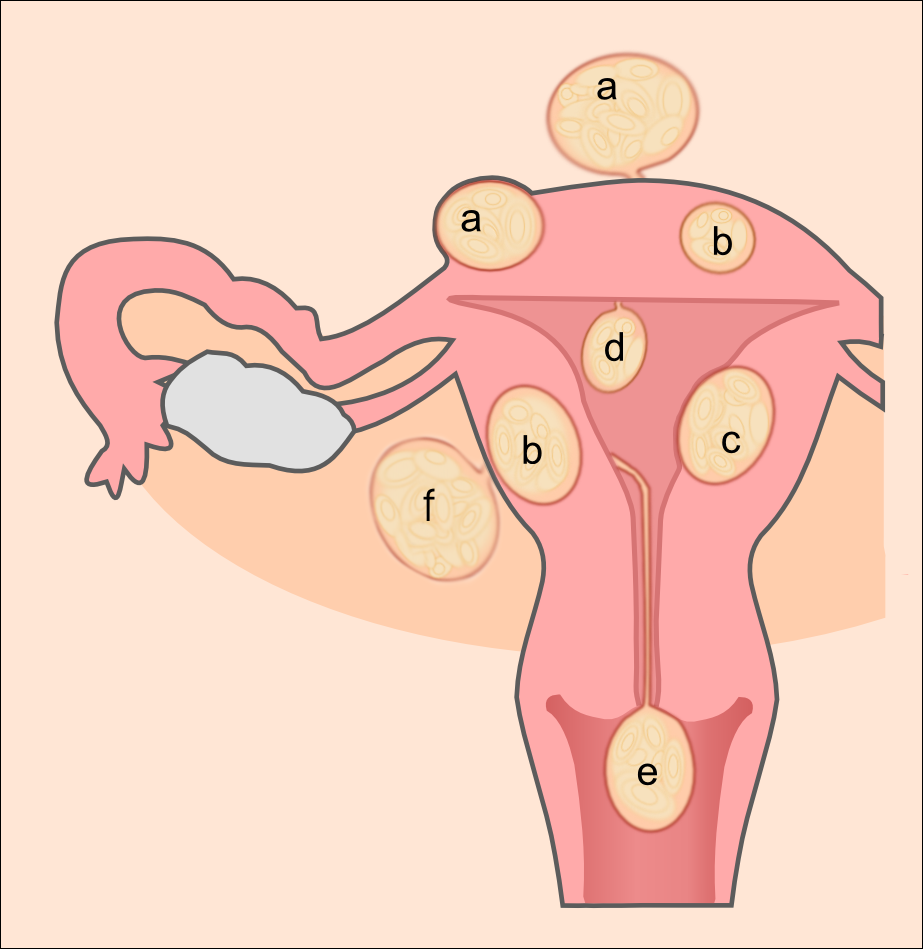
Uterine fibroids — medically *leiomyomas* — are non-cancerous growths of the muscular wall of the uterus. By the age of 50, around 70–80% of women have at least one, although most never notice them. They can be:
Subserosal — on the outer surface of the uterus.
Intramural — within the muscular wall.
Submucosal — bulging into the uterine cavity (these cause the most bleeding).
Pedunculated — attached by a stalk.
A fibroid only needs treatment if it's actually *causing* a problem:
Heavy, prolonged or painful periods.
Pressure symptoms — frequent urination, constipation, low backache, pelvic heaviness.
Difficulty conceiving, or recurrent miscarriage (especially submucosal types).
Rapid growth.
Rare: bleeding after menopause from a fibroid.
A 4-cm symptomless fibroid found during a routine scan often needs nothing more than yearly follow-up.
For small, asymptomatic fibroids. Annual scan, ferritin check, symptom diary.
Tranexamic acid for heavy bleeding.
NSAIDs for pain.
Combined OC pills or oral progestins.
Mirena IUS — excellent for heavy bleeding from small/medium fibroids that don't distort the cavity.
Ulipristal / GnRH analogues — short-term shrinking before surgery or near menopause.
Uterine artery embolisation (UAE): done by interventional radiology, shrinks fibroids by cutting off blood supply. Good for women who want to avoid major surgery and don't have immediate pregnancy plans.
HIFU (high-intensity focused ultrasound): non-surgical, MRI-guided heat destruction of fibroid tissue. Available in select centres.
*Removes the fibroid, keeps the uterus.* Routes:
Hysteroscopic (through the cervix) — for submucosal fibroids inside the cavity.
Laparoscopic / robotic — for most subserosal and intramural fibroids.
Open abdominal — only for very large or multiple fibroids.
Myomectomy preserves fertility. Recovery: 1–2 weeks (laparoscopic), 4–6 weeks (open).
*Removes the uterus completely.* Considered when:
Family is complete.
Fibroids are very large or numerous.
Earlier treatments have failed.
The woman herself, after counselling, prefers a one-time definitive solution.
It is *definitive* — fibroids cannot recur. But it ends the possibility of pregnancy, so the decision is never rushed.
Situation First-line treatment
------
Small, asymptomatic Observation
Heavy bleeding, fibroid not in cavity Mirena IUS or medical therapy
Submucosal fibroid causing bleeding/infertility Hysteroscopic myomectomy
Wants to preserve fertility, larger fibroids Laparoscopic/robotic myomectomy
Family complete, multiple/large fibroids, no improvement with other options Hysterectomy or UAE |
1. "Fibroids always need to be removed." False — most don't. Symptoms decide.
2. "Fibroids become cancer." Extremely rare. The cancerous form (leiomyosarcoma) is a different disease, not a fibroid that "turned bad" — and it's less than 1 in 1000.
If you've been told you have a fibroid, take a breath. Get an ultrasound report with measurements, list your symptoms honestly, and ask for the *least* invasive option that solves the real problem.
Women's Health 10 min read
Fibroids — Do They Always Need Surgery? A Modern Look
By Dr. Neha Singhania • 2026-02-26
What fibroids are (and how common)
Uterine fibroids — medically *leiomyomas* — are non-cancerous growths of the muscular wall of the uterus. By the age of 50, around 70–80% of women have at least one, although most never notice them. They can be:
When fibroids are causing trouble
A fibroid only needs treatment if it's actually *causing* a problem:
A 4-cm symptomless fibroid found during a routine scan often needs nothing more than yearly follow-up.
Treatment options — from least to most invasive
1. Watchful waiting
For small, asymptomatic fibroids. Annual scan, ferritin check, symptom diary.
2. Medical management
3. Minimally-invasive procedures
4. Surgery — myomectomy
*Removes the fibroid, keeps the uterus.* Routes:
Myomectomy preserves fertility. Recovery: 1–2 weeks (laparoscopic), 4–6 weeks (open).
5. Surgery — hysterectomy
*Removes the uterus completely.* Considered when:
It is *definitive* — fibroids cannot recur. But it ends the possibility of pregnancy, so the decision is never rushed.
A simple guide to choosing
Situation First-line treatment
------
Small, asymptomatic Observation
Heavy bleeding, fibroid not in cavity Mirena IUS or medical therapy
Submucosal fibroid causing bleeding/infertility Hysteroscopic myomectomy
Wants to preserve fertility, larger fibroids Laparoscopic/robotic myomectomy
Family complete, multiple/large fibroids, no improvement with other options Hysterectomy or UAE |
Two things almost everyone gets wrong
1. "Fibroids always need to be removed." False — most don't. Symptoms decide.
2. "Fibroids become cancer." Extremely rare. The cancerous form (leiomyosarcoma) is a different disease, not a fibroid that "turned bad" — and it's less than 1 in 1000.
If you've been told you have a fibroid, take a breath. Get an ultrasound report with measurements, list your symptoms honestly, and ask for the *least* invasive option that solves the real problem.
Have questions? Talk to the doctor
Book an appointment with Dr. Neha Singhania for personalised advice.